How to know if Tenacious is the right investor for you
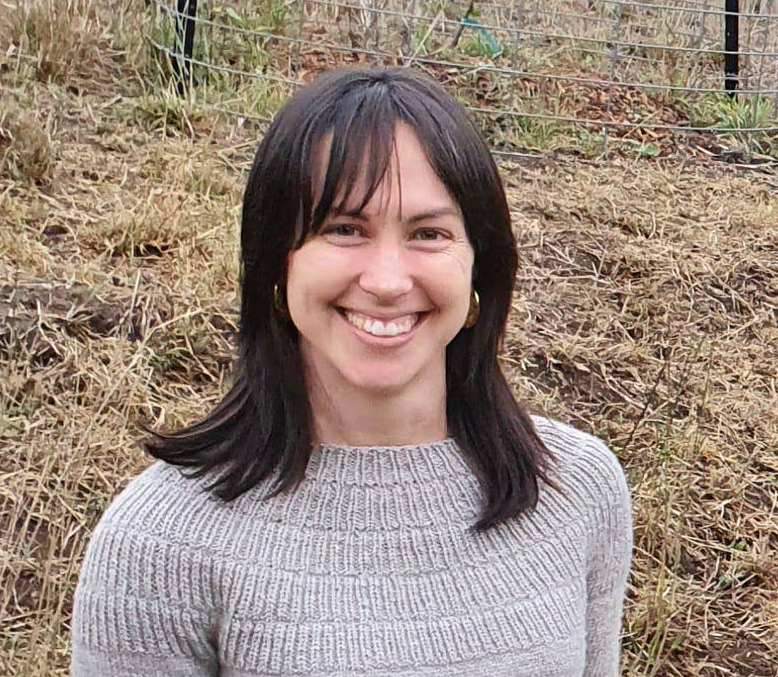
I’m Maddie and I'm responsible for our early pipeline. If you’ve ever wanted to better understand who we are, what we invest in, and how you can start a conversation with us, I wrote this for you.
Tenacious Ventures is Australia's first and only agrifood tech investment and insights platform. You might already know us from our podcast, AgTech…So What?, or from our industry advisory work. Our investment arm is another way we deliver on our mission: unlocking impact at scale in agrifood systems.
Despite having 'ventures' in our name, we're not a traditional venture capital fund. We're deliberate about having capital that is a fit for agriculture. That means learning from past failures in the sector, understanding the limits of the Silicon Valley VC model for agtech, and leveraging different capital stacks. It also means we back companies solving real problems for real customers rather than chasing valuations or other vanity metrics.
Since joining the team, I’ve been responsible for the early stages of our pipeline and I’ve realised there are areas where we could be clearer about our mandate and what gets our attention.
Most of what lands in our pipeline doesn't make it past an initial review, and the reasons are usually straightforward. The stage is too late, the cheque size doesn't fit, or there's no clear connection to Australia or New Zealand. That last one is the easiest to fix. If you have an ANZ angle — a customer, a partner, or a plan to commercialise here — say so upfront. I shouldn't have to go looking for it.
I decided to write this post because I want to help founders understand when they should connect with us and when it's probably not the right fit.
Feel free to skip ahead to the sections most relevant to you.
Do you qualify?
We want founders to be able to answer this in under a minute. Here is our mandate:
We are agrifood-specific but otherwise sector-agnostic.
We invest in all parts of agrifood, across all commodities, from pre-farmgate to waste, processing, and packaging.
The technology can come from anywhere, but the impact must be in agrifood systems. Of course, we still get excited about companies working in adjacent and unrelated sectors, but we understand and can add more value in agrifood.
We write first cheques at pre-seed and seed stage, up to AUD 1.5 million.
We can lead or follow a round and we reserve capital for follow-on investments.
Sometimes we might like a company but the economics or stage of a raise are beyond our sweet spot. It’s disappointing for everyone but it’s just part of finding the right fit.
We have a strategic focus on Australia and New Zealand, although we look for global applicability and scale.
The easiest fit is a company based in Australia or New Zealand, but we also consider companies with meaningful partnerships, presence, or commercialisation plans in the region. Although, we never want to see companies choosing a path that isn't in their best interests just to meet this part of our mandate.
Climate impact is essential.
This is key to our mission and can take the form of decarbonisation of agrifood systems, ecological sustainability, or climate adaptation and resilience.
You might not currently think of yourself as an agrifood founder, and that is fine. If you are working on a technology that has a credible application in food or agricultural systems, we want to hear from you, no matter your background. Some of our founders were or still are farmers, chefs, scientists, consultants, investors, and executives.
What we invest in
We think about where capital can move the needle in agrifood systems, and we've identified six areas where we see strong opportunities:
- Waste and resource recovery
- Embedded finance and risk
- Sustainable protein
- Lower intensity production
- Democratized infrastructure
- Enhanced natural capital
If your work touches any of these areas, even if you wouldn't have called it agrifood, we want to hear from you. You can also read more about these topics and themes here.
What we don’t invest in
Our investment strategy means that we don’t invest in farms or CPG/FMCG companies. We think of returns coming from an exit like an acquisition or a listing. So, if your business plan involves giving your shareholders dividends, or you’re not yet clear on how you would give your shareholders a commercial return, this is something to consider before approaching us.
What I’ve learned so far
I've been running our early pipeline since mid 2025 and one thing that has surprised me is how often founders who have clearly done their research still spend the first part of a call walking us through the basics of agrifood. We're specialists; the high-level context isn't what we need from you. What we need is to understand your specific problem, your approach, and why you're the right person to solve it.
I've also had to learn to be more direct, both about our mandate and about feedback. It doesn't help anyone to be vague about fit or to soften a pass to the point where the message gets lost.
And I've learned to lead with the biggest questions first, even when I have real curiosity about other things. If there's a fundamental issue with fit, it's better for everyone to get to it early.
Common misconceptions to clear up
We’ve seen from both sides of the table that fundraising can be opaque and confusing. For this section, I had a conversation with our managing partner Sarah Nolet about the patterns she's seen over the last decade in agrifood. I found it useful to hear the history because it's easy to look at our portfolio companies the way they are now and not appreciate how much they've changed, or how much we've learned alongside them. What follows draws on that conversation, and on what I've started to notice in our pipeline myself.
You don’t have to have all the answers
There are lots of reasons we pass, like too much technical risk, being too far from revenue, or having to raise too much money. Beyond alignment on these fundamentals, we look for self-awareness in founders and evidence that they’ve done their homework. We don’t expect you to have all the answers. What we want to understand is how you think about the problems you’ll face and what experiments you’ll run to figure stuff out.
Hearing about Ornata, it was clear to me that it wasn’t just their track record that stood out, but also how they showed up. Co-founders Josh and Michael spoke frankly about the public difficulties of their previous company and what they'd learned from it. And then they pushed back on us, asking hard questions about our value-add and whether we'd genuinely be useful to them. We saw that as a good sign too. The combination of self-awareness and confidence is something I look for in founders from the beginning.
You don’t need a warm intro
There is no single right way to attract our interest. However, filling out the form on our website is a minimum as it ensures we get the information we need. We’re happy for you to send a LinkedIn message or email as well, but we review everything that comes in, warm introduction or not.
To be honest, applications that sit on the edge of our mandate are sometimes the hardest to assess, and don’t always get the attention they deserve. What helps me immediately in these cases is a clearer signal upfront about the agrifood connection and why a specialist agrifood investor like us is the right fit.
Earthodic submitted a cold application through our website with a deck that signalled the team understood fundraising, their industry, and where value actually gets created. The first call confirmed this and introduced us to a team with complementary skillsets. We liked that their approach was capital-light, did not rely on a green premium, and focused on getting product into customers' sales funnels to test rather than hoping to be discovered.
A cold submission got Earthodic to a first call. The rest followed from there.
You don’t need to speak fluent VC
I've met Olympia, founder at Goterra, a few times and she's the kind of founder I find it easiest to back. There's no performance, just clarity about what she's building and why.
We met Olympia at a Rabobank pitch competition, well before the company would raise its pre-seed round. Her pitch wasn't polished. She brought actual maggots in a bucket. But she was sharp, straight talking, and knew her business. When it became clear she hadn't yet learned to “speak VC”, she asked for help directly, and got better at it fast.
In my experience, knowing what you don't know and being willing to say so is a much better signal than having all the answers.
You don’t have to go it alone
One of the things I'm trying to understand, especially with highly technical founding teams, is whether they have the range to take the company all the way, or whether they know they don't. The companies in this story made that call themselves. But I've also spoken to founders who are upfront that they don't see themselves as a long-term CEO, and I find that honesty useful. We can work with that.
The common thread across our investments in Nbryo, Jupiter Ionics and Agovor is a veteran operator joining an early-stage company, and that hire being either the catalyst for our interest or a meaningful part of why we said yes. In each case, the founders made the call themselves: Nbryo already had Gerard in place and Jupiter Ionics already had Charlie. Richard and Simon from Agovor were building autonomous eTractors when they connected with Mike, who had already scaled and taken a hardware company to exit in agtech.
These are people who've managed teams, built boards, and navigated the build-versus-buy decisions that can consume the energy of first-time founders. This means less time spent on reinventing the basics, more time spent on the truly hard problems. That's a meaningful advantage for an early stage company.
Why would you choose us?
I joined Tenacious because I believe in our thesis. In my previous role I was the agrifood specialist inside a fund that invested across five sectors. In theory, agrifood had a seat at the table. In practice, making the case for investments that looked so different from the rest of the portfolio — not quantum computing, health tech or clean energy — in a sector that is complex and heterogeneous, could feel like an uphill battle. At Tenacious that tension doesn't exist. We can focus our time and attention on what works, and what we think will lead to the impact and returns we all want to see.
There are plenty of pre-seed investors who write cheques of similar size to us. What we offer that's harder to find is genuine fluency in agrifood that translates into an ability to open doors with customers, co-investors, and downstream capital. Collectively, we have worked on farms, built and sold companies, and designed and delivered research programs. We know the complexity of agrifood firsthand, and helping founders translate that complexity into a story others can get excited about is one of the most useful things we can do.
We work differently with each portfolio company, and we expect that relationship to change as you grow. We will make requests of you, but we aim to give more than we get. We've been founders and operators ourselves, which means we know what it feels like to be on your side of the table, and we know when to push and when to get out of the way. We value honesty, and it has to be reciprocal.
We often take board seats, but we don’t have to. We reserve capital to follow-on, noting that as a small fund, we’re not going to lead your Series A. What we can do is introduce you to downstream investors and syndicate rounds as high conviction, specialist investors.
What should you do now?
If you've read this and something resonated — a problem we named, a case study that looked like your situation, a part of the mandate that fits where you're headed — that's enough reason to reach out. We'd rather hear from you early than have you wait until you think you're ready!
Want more content like this? Sign up for our weekly insights.